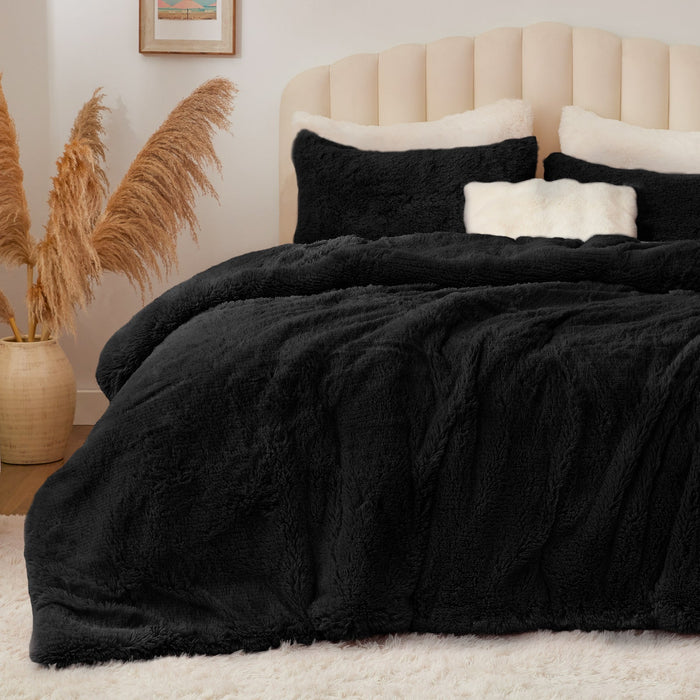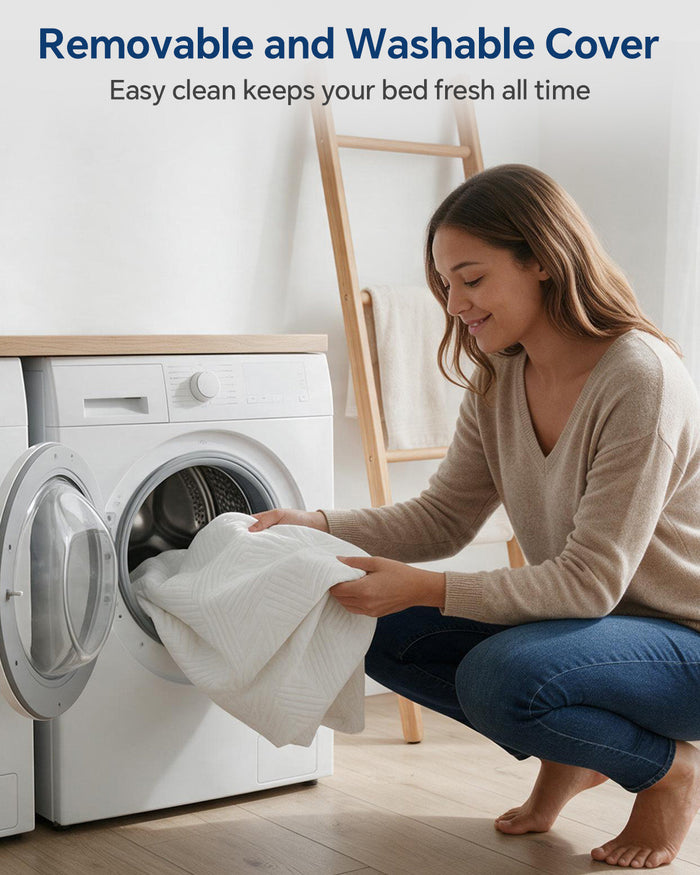

A fluffy comforter set can often regain its loft after washing, storage, or compressed shipping. Spread it out, check for damp or uneven areas, shake it from several sides, and gently separate clumps by hand. Use a dryer only when the care label allows it. The right method depends on the cause: compression, shifted fill, clumps, or trapped moisture.
Quick Takeaways
| What You Notice | Likely Cause | Best First Step |
|---|---|---|
| Evenly flat after unboxing | Shipping compression | Spread it out, shake it, and give it time to expand |
| Flat after seasonal storage | Long-term pressure | Air it in a dry room and redistribute the fill by hand |
| Soft lumps after washing | Damp or gathered fill | Check for moisture, loosen clumps, and continue label-approved drying |
| Thick and thin areas | Shifted fill | Move the fill back within each stitched section |
| Hard clumps that remain after drying | Residue, matting, or fill damage | Recheck the care label and avoid forceful pulling or high heat |
Why a Comforter Can Look Flat After Washing, Storage, or Shipping
Comforter loft comes from air held within and around the filling. Tight folding, vacuum packing, and the weight of other bedding push out that air, so the fill needs room and time to expand again.
Wet fill becomes heavy and may gather inside stitched boxes or channels. The filling can stay stuck together when the center remains damp, even if the shell feels dry. A crowded washer or dryer also limits movement and creates uneven drying.
Uneven filling may have moved toward one side or collected along a seam. A flat packaged comforter needs expansion time, while a damp-smelling one needs further drying. The airy look associated with a cloud comforter appears after the fill is dry and evenly distributed.
What to Check Before Trying to Fluff the Comforter
Begin with the sewn-in care label. Comforters may contain polyester, down, cotton, wool, silk, or blended fill, and the shell may have its own care limits. Purdue Extension recommends checking the fabric care label first because specialty bedding can require specific washing and drying methods.
Next, place the comforter on a clean bed or another large, flat surface. Check these points before adding heat or agitation:
- Feel the center, corners, and thickest areas for cool or damp spots.
- Compare the stitched sections for lumps, empty areas, or uneven thickness.
- Look for loose seams, broken quilting, or fill escaping through the shell.
- Make sure the dryer drum is large enough for the comforter to tumble freely if machine drying is allowed.
A damp comforter needs complete drying before you judge its loft. If a seam has opened, seek repair guidance before shaking because additional fill could escape. BEDELITE synthetic-fiber comforters use a cold-water gentle-care routine with a large-capacity washer and low tumble drying. The item’s sewn-in label remains the final instruction.
How to Restore Loft Without Damaging the Fill
Use the gentlest method that fits the cause. Give the comforter enough space to move, and work in stages so you can check the fill between steps.
After Unboxing or Storage
Remove all packaging and unfold the comforter across the bed. Give it several controlled shakes from each edge so the fill can spread in different directions.
Leave it open in a clean, dry, well-ventilated room. Turn it over after a few hours and smooth the stitched sections with your hands. Fill that has remained compressed for a long time may need a day or longer to relax.
After Washing
Check for dampness first. Follow the approved drying method and pause to reposition the comforter if it is still wet inside. Thick comforters need extra attention because the surface may dry before the center.
For soft clumps, hold the shell around the affected section and gently massage the filling apart. Move small amounts toward thin areas without tugging the fabric or stitching, then shake the comforter again.
If the label permits machine drying, use a roomy drum and the stated temperature. Air-fluff, no-heat, or low-heat settings can help some comforters expand. Dryer balls may help compatible fill when the manufacturer allows them.
Tennis balls can transfer color, odor, or surface residue. They should only be used when the comforter manufacturer permits them and the balls are clean, colorfast, and securely covered.
When the Fill Has Shifted
Hold the comforter up in a bright room to locate thin and dense areas. Lay it flat, then guide the filling within each stitched compartment using short, gentle pushes.
Fill that repeatedly moves into the same area may point to an open internal channel or damaged stitching. Careful redistribution can improve the appearance temporarily, while structural repair may provide better long-term control.
How Washing and Drying Affect Fill Distribution
A comforter needs room in the washer. Tight packing limits water movement, encourages bunching, and may trap detergent in dense sections. Use a large-capacity machine when the care label allows machine washing.
Wet filling settles when a comforter stays in one position. Repositioning it during an approved drying cycle improves airflow and lets you loosen soft clumps before they become harder to separate.
High heat can affect some fills, shells, finishes, and stitching. A lower approved setting with free tumbling supports more even drying. Adding extra heat cannot make up for a dryer drum that is too small.
Comforters that must air-dry still need strong airflow and adequate support. Spread the weight across a drying rack or several lines when the label allows hanging. Turn and reposition the comforter so moisture does not remain trapped in the center.
Excess detergent can also affect the result. Bulky bedding can be difficult to rinse, and leftover detergent may make the fill feel stiff or heavy. If a dry comforter still feels coated or clumpy, consult its label or manufacturer before rewashing or adding another rinse.

How to Store a Comforter Without Compressing the Fill
Clean the comforter according to its label and dry it completely before storage. Use a breathable bedding bag or roomy container, and keep heavy items off the top.
Choose a clean area with a stable indoor temperature. Attics, damp basements, and spaces near water pipes expose bedding to larger changes in heat or moisture. Textile-preservation advice also favors a cool, dry storage space and as few firm folds as practical.
Use broad, loose folds and change the fold lines during long storage. Give thick comforters enough shelf space so they are not tightly wedged between other items.
Vacuum bags save space, but extended compression can slow loft recovery and may conflict with the manufacturer’s storage instructions. Reserve them for products whose labels or manufacturers confirm that compressed storage is suitable.
Take the comforter out before the night you plan to use it. Early unfolding gives the fill time to expand and reveals any area that needs hand redistribution.
Restore Loft With Care
Most flat or lumpy comforters improve with complete drying, expansion space, controlled shaking, and gentle hand redistribution. Match every step to the care label, especially before adding heat or dryer accessories. For a fluffy comforter set with easy home care, compare the fill construction, quilting, and instructions across our comforter set collection.
FAQs about Fluff a Comforter
Q1. How Do I Make My Comforter Fluffy Again?
Spread the dry comforter over a large surface, shake it from each side, and gently separate soft clumps through the shell. Give compressed fill time to expand in a dry, ventilated room. Use a dryer only when the care label permits it and the drum provides enough tumbling space.
Q2. Can You Fluff a Comforter in the Dryer?
Yes, if the care label allows machine drying. Select the approved setting, use a drum large enough for free movement, and pause to reposition the comforter. Avoid high heat unless the manufacturer specifically permits it.
Q3. Why Is My Comforter Lumpy After Washing?
The filling may still be damp, gathered in stitched sections, or coated with detergent residue. Check the center for moisture, loosen soft clumps by hand, and continue drying according to the label. A crowded washer or dryer can also contribute to uneven results.
Q4. How Long Does a Vacuum-Packed Comforter Take to Fluff Up?
Some comforters expand within a few hours, while tightly compressed pieces may need a day or longer. Spread the comforter out, shake it from several directions, and follow the product’s unboxing instructions. Fill type, packaging pressure, and time spent compressed all affect recovery.
Q5. Do Dryer Balls Help Fluff a Comforter?
Dryer balls can help compatible comforters move and separate during a label-approved drying cycle. They are optional and may be unsuitable for some shells, fills, or dryer instructions. Check the care label or manufacturer guidance before adding them.
Q6. Can You Fluff a Comforter Without a Dryer?
Yes. Lay it flat in a dry, ventilated area, shake it from every side, and massage clumps one section at a time. Turn it periodically and make sure the filling is completely dry before returning it to the bed or storage.