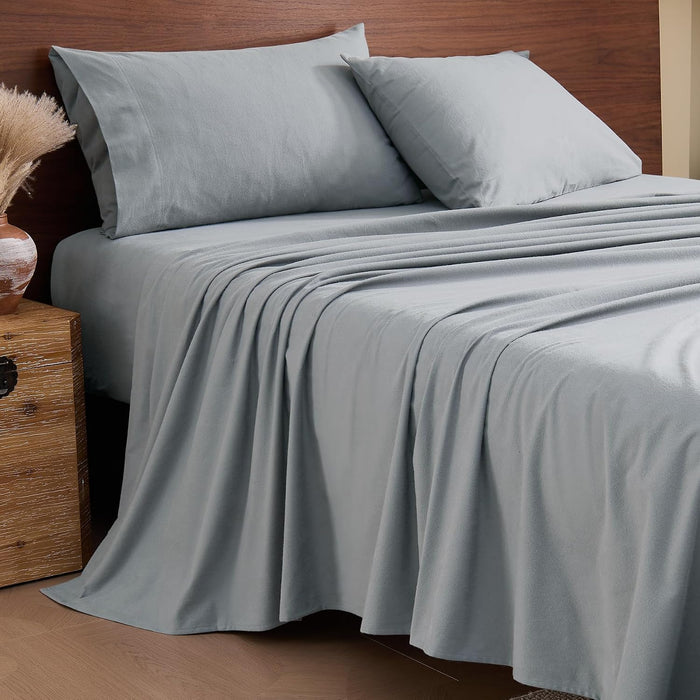

The right pillowcase matches the pillow inside it. A Standard pillow usually needs a Standard case, while Queen, King, and Body pillows need cases made for their extra length. This pillowcase size chart gives you a practical starting point, then shows how pillow loft, openings, closures, and decorative edges can change the fit.
Quick Takeaways
| Key Point | What It Means |
|---|---|
| Match the pillow | Choose the case for the pillow's size, not the mattress label. |
| Check the actual numbers | Standard, Queen, King, and Body labels can have product-specific finished dimensions. |
| Allow for fullness | A high-loft pillow needs more interior room than a flatter pillow of the same length. |
| Review the closure | Open ends, envelope panels, and zippers change how the case fits and stays closed. |
Standard, Queen, King, and Body Pillowcase Sizes
Pillowcase labels are based on the pillows they are designed to hold. The product dimensions show how much fabric is actually available.
| Pillowcase Label | Common Pillow Size | Difference From Standard | Typical Use |
|---|---|---|---|
| Standard | 20 × 26 inches | Reference size | Standard sleeping pillows on Twin, Full, and Queen beds |
| Queen | 20 × 30 inches | 4 inches longer | Queen pillows or sleepers who want a little extra pillow length |
| King | 20 × 36 inches | 10 inches longer | King pillows and wider pillow arrangements |
| Body | 20 × 54 inches is common | 28 inches longer | Full-body support, side sleeping, and pregnancy pillows |
This table shows common pillow dimensions, not a universal finished-case standard. For example, the NIST labeling rule for pillowcases treats the intended pillow size and the finished pillowcase size as separate measurements. Its Standard example fits a 20 × 26-inch pillow, while the finished open-end case measures 20 × 30 inches.
A Utah State University Extension pillowcase chart also pairs 20 × 26, 20 × 30, and 20 × 36-inch pillows with longer open-end cases. Envelope and zippered cases may sit closer to the pillow dimensions.
Although 20 × 54 inches is common for body pillows, some inserts are shorter or longer. Measure yours before ordering a cover.
Why the Pillow Size Matters More Than the Mattress Size
Mattress size can suggest how many pillows fit across a bed, but it does not determine each case. A Queen bed might hold Standard pillows, Queen pillows, or a mix of sleeping and decorative pillows. Each insert needs a case that fits its length, width, and fullness.
Sheet sets add another source of confusion. Sheet-set size names do not guarantee one universal finished pillowcase measurement. The BEDELITE bedding size guide lists the pillowcase or sham dimensions included with each bedding set, so shoppers can check the actual pieces in that specific set before ordering.
If the pillow label is missing, lay the pillow flat and measure from seam to seam without pressing down the fill. Compare those numbers with the fit information for the case.
Can Standard and Queen Pillowcases Be Interchanged?
Standard and Queen pillows are commonly the same width, yet a Queen pillow is about four inches longer. That difference affects the fit.
Using a Queen Case on a Standard Pillow
A Standard pillow usually fits inside a Queen pillowcase. The extra length creates a loose end or deeper fold. An envelope closure can hold the extra fabric neatly, while an open-end case may look less tailored. Check that the pillow does not slide toward one end during the night.
Using a Standard Case on a Queen Pillow
A Standard case is usually too short for a Queen pillow. A soft, low-loft Queen pillow may squeeze inside, but the case can compress the fill or leave the opening exposed. Pulling hard also stresses the seams.
Choose a Queen case when you want the pillow to keep its intended shape and the closure to work properly. The four inches of added length give the insert space without forcing the end seam.

How Pillow Loft Changes the Fit
Loft is the height or fullness of a pillow. Two pillows can share the same length and width while filling a case differently. A gusseted or very fluffy pillow uses more interior space.
A snug case can make a high-loft pillow feel firmer. Extra room lets the pillow expand, though too much space can create wrinkles or shifting.
Use this quick check before buying:
- Measure the pillow from seam to seam without flattening it.
- Look at the side profile and note if the pillow is especially full or has a gusset.
- Compare the pillow measurements with the case's finished dimensions.
- Check reviews or fit notes for high-loft pillows when the measurements are close.
Flexible fiber fill compresses more easily than dense memory foam or molded latex. If the fit is close, choose enough room to protect the seams and preserve the pillow's shape.
How Closures and Decorative Edges Affect Usable Space
Outside dimensions do not always equal usable interior space. The opening and finishing details affect insertion and coverage.
Open Ends and Envelope Closures
An open-end case often includes extra length for a cuff or inner tuck. A case that is barely long enough may expose the pillow during sleep. An envelope closure uses an overlapping panel to cover the pillow end. It needs enough room to fold over a full pillow, so review the closure depth and finished dimensions.
Hidden Zippers and Decorative Flanges
A hidden zipper creates a closed edge. Avoid forcing a dense or high-loft insert through a tight opening, and close the zipper after the corners are fully inside.
Decorative flanges extend beyond the inner seam, adding visual size without enlarging the pocket. Check the insert recommendation for a flanged sham.
Current pillowcases and body pillow covers include envelope and hidden-zip styles in several sizes. The individual product page shows the exact dimensions and closure, which is the information that matters when comparing two cases with the same size name.
Measure the Pillow Before Choosing the Case
Measure the pillow, then match its size, loft, and shape to the case. Check the finished dimensions and closure before ordering. This keeps the opening neat and reduces stress on the seams.
FAQs about Pillowcase Sizes
Q1. What Is the Standard Pillowcase Size?
A Standard pillow is commonly 20 × 26 inches. Its case may be longer when it has an open end or cuff, so check the finished dimensions.
Q2. Can a Standard Pillow Fit in a Queen Pillowcase?
Yes. A Queen case is commonly four inches longer, so a Standard pillow will usually fit with extra fabric at the end. An envelope closure can help keep the looser end looking tidy.
Q3. Can a Queen Pillow Fit in a Standard Pillowcase?
A low-loft Queen pillow may squeeze into some Standard cases, but the fit is often tight or too short. A Queen case gives the pillow enough length to stay covered and maintain its shape.
Q4. What Are King Pillowcase Dimensions?
A King pillow commonly measures 20 × 36 inches, so look for a King case made for that insert. Finished dimensions can vary, and some stores also use labels such as Small King, so confirm the numbers shown for the selected product.
Q5. What Size Pillowcase Fits a Body Pillow?
Many body pillows use a 20 × 54-inch cover. Body-pillow lengths vary, so measure your insert from end to end and check its loft before choosing a cover.
Q6. Should a Pillowcase Be Larger Than the Pillow?
A pillowcase needs enough usable space for the pillow's fullness and closure. Open-end cases are often longer than the pillow, while zippered or envelope styles may fit closer to the insert dimensions. The best fit holds the pillow securely without compressing the fill or pulling at the seams.