Quick Takeaways
| Comparison Point | Polyester Satin Sheets | Genuine Silk Sheets |
|---|---|---|
| What it is | Polyester woven in a satin structure | Natural silk fiber, often woven in a satin structure |
| Surface feel | Smooth, glossy, and sometimes noticeably slick | Smooth, soft, and generally more supple |
| Sleep temperature | May retain more warmth and feel clammy during perspiration | Absorbs moisture more readily and often feels more balanced |
| Movement on the bed | Can slide against pajamas and other smooth bedding | Drapes closely but may also shift on smooth surfaces |
| Durability | Usually easier to maintain, although the surface can snag or pill | Can last well with careful handling but is sensitive to heat and harsh chemicals |
| Care | Often machine washable and suitable for low-heat drying | Usually requires gentler washing and air drying |
| Price | More affordable | Considerably more expensive |
| Best suited to | Shoppers prioritizing shine, easy care, and a lower price | Shoppers prioritizing natural fiber, moisture handling, and a more supple feel |
The better choice depends on your sleep temperature, preferred texture, care routine, and budget. Start with the fiber-content label because the word “satin” alone does not tell you what the sheets are made from.
Silk Describes a Fiber While Satin Describes a Fabric Structure
Silk is a natural protein fiber produced by silkworms. It can be woven into several fabric structures, including satin. A sheet made from silk yarns in a satin construction may therefore be accurately described as silk satin.
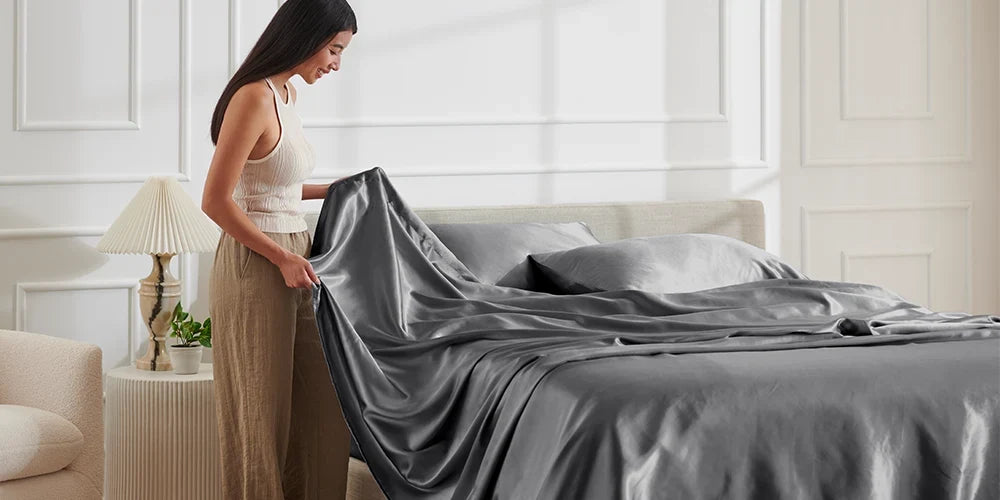
Satin refers to a weave that places longer sections of yarn across the fabric surface. This construction creates a smooth face with a noticeable sheen and a duller reverse side. The long surface floats also help the fabric drape fluidly, although they can catch on rough skin, jewelry, pet claws, or damaged laundry equipment. The satin weave structure is what creates the characteristic finish, regardless of whether the yarn is silk or synthetic.
A glossy appearance alone does not reveal the fiber. Polyester satin, silk satin, nylon satin, and rayon satin can look similar in photographs while behaving differently during sleep and laundering.
Sateen is another term shoppers may encounter. It uses a related construction and produces a smooth surface, but bedding manufacturers commonly use “sateen” for fabrics made with spun yarns, including cotton and bamboo viscose. The fiber label remains the most reliable way to identify the material.
What Most Satin Sheets Are Actually Made From
Many mass-market satin sheets are made from polyester because the fiber can produce an even shine at a more accessible price. Polyester satin also resists wrinkles, dries relatively quickly, and often supports routine machine washing when permitted by the care label.
Some satin sheets use nylon, acetate, rayon, or fiber blends. These fabrics may share a glossy appearance, but their breathability, moisture handling, strength, and care requirements can differ. Product titles such as “silky satin” describe a feel and should not be treated as proof of silk content.
Genuine silk sheets should identify silk in the fiber-content information. Under U.S. textile labeling requirements, covered bedding products must disclose their generic fiber names and percentages by weight. The label also provides country-of-origin and company-identification information.
If a listing repeatedly says “satin,” “silky,” or “silk feel” without identifying the fiber, check the specifications or sewn-in label before purchasing.
Feel, Warmth, Breathability, and Movement on the Bed
Polyester satin and genuine silk can both feel smooth, but they do not manage heat and moisture in the same way. Construction, fabric weight, finishing treatments, room humidity, and upper bedding also affect the final experience.
| Comparison Factor | Polyester Satin | Genuine Silk |
|---|---|---|
| Surface feel | Smooth, glossy, and sometimes noticeably slick | Smooth, soft, and usually more supple |
| Warmth | May retain more warmth, especially in a dense fabric | Often feels more balanced as temperature changes |
| Moisture handling | Absorbs little moisture and may feel clammy during heavy perspiration | Absorbs moisture more readily |
| Movement | Can slide against pajamas and other bedding | Drapes closely and may also shift on smooth surfaces |
| Weight and drape | Varies widely by fabric weight and finish | Usually fluid, with weight often described in momme |
| Typical price | More accessible | Considerably more expensive |
A lightweight, well-constructed polyester satin may feel more comfortable than a heavy synthetic satin, while a dense silk fabric may feel warmer than expected.

Surface Feel and Bed Movement
Polyester satin often has a slick, polished surface. Genuine silk usually feels softer and more supple, although weave, weight, and finishing can change the result. Samples or a flexible return policy can help if surface texture is a major priority.
Both materials may move more easily than crisp cotton or textured flannel. A smooth mattress protector, loose fitted-sheet pockets, weak elastic, or restless sleeping can increase shifting. Check the fitted-sheet construction instead of assuming the fiber alone is responsible.
Temperature and Moisture
Silk is absorbent and can take up perspiration before releasing moisture as conditions allow. Polyester absorbs relatively little moisture, so some sleepers notice dampness or warmth when airflow is limited.
Room temperature, humidity, pajamas, mattress materials, and blankets still matter. No sheet can compensate fully for a heat-retaining mattress or a heavy comforter in a warm room.
Durability, Snagging, and Everyday Care
Durability depends on both the fiber and the fabric construction. Satin’s smooth face comes from long yarn floats, which can snag when they meet rough objects. Washing sheets with towels, jeans, zippers, or hook-and-loop fasteners increases friction and contact with abrasive surfaces.
Polyester satin generally handles routine use and repeated laundering more easily than genuine silk. It can still pill, develop pulled threads, or lose surface quality when exposed to overloaded machines, aggressive cycles, and high dryer temperatures.
Silk can be strong under normal dry conditions but becomes more vulnerable when wet. High temperatures and chlorine bleach can also damage the fiber, making careful handling important. These silk fiber properties explain why the product’s permanent care label should guide washing and drying.
Caring for Polyester Satin
Wash polyester satin separately or with similarly smooth, lightweight items. Use the water temperature and cycle listed on the label, avoid overloading the machine, and keep abrasive garments out of the load.
Use a modest amount of detergent and select low dryer heat when machine drying is allowed. Remove the sheets promptly to reduce wrinkles and unnecessary tumbling.
Caring for Genuine Silk
Follow the manufacturer’s instructions because some silk sheets permit gentle machine washing while others require hand washing or professional cleaning. Use a detergent suitable for silk, avoid chlorine bleach, and handle the wet fabric without twisting or wringing it.
Air drying is often the safest approach when the label permits it. Keep silk away from direct heat and prolonged strong sunlight, and consult the brand’s instructions before ironing or steaming. BEDELITE owners can review the company’s bedding care guide for instructions that apply to their specific products.
How to Read the Label and Compare Real Value
Price alone cannot confirm whether a sheet set provides good value. Check these details before comparing two glossy-looking products:
- Fiber content: Look for specific percentages such as 100% polyester or 100% silk. Terms such as “silky” and “silk-like” do not identify a fiber.
- Fabric construction: Determine whether satin describes the weave, the surface finish, or both. A silk product may use a satin construction, while a polyester product can have the same weave.
- Fabric weight: Silk listings may provide a momme measurement, while synthetic products may use GSM or omit weight entirely. Compare weight measurements only among similar materials and product types.
- Set contents: A satin bed set may include a fitted sheet and pillowcases without a flat sheet. A silk sheet set may contain fewer pieces despite having a higher price.
- Finished dimensions: Confirm the fitted-sheet width, length, and pocket depth. Also check the flat-sheet and pillowcase measurements instead of relying only on labels such as Queen or King.
- Care requirements: Consider the time, detergent, drying space, and professional cleaning costs the material may require.
- Return policy: Color, shine, and slickness can appear different at home. A clear return policy is valuable when you cannot touch the fabric before ordering.
Thread count should not be used to compare polyester satin with genuine silk. Different fibers, yarn structures, fabric weights, and counting methods prevent one thread-count number from representing overall quality across both categories.
Match the Fabric With Your Sleep and Care Preferences
The better option depends on how you sleep, what texture you enjoy, and how much maintenance fits your routine. Neither material is automatically best for every household.

Choose Polyester Satin When
Polyester satin may suit shoppers who want a glossy, smooth surface at a more accessible price. It can also be practical when machine-washable bedding and faster drying are important.
Check the fabric weight and return policy if you sleep warm or dislike very slippery bedding. A dense polyester satin may feel warmer or move more than expected.
Choose Genuine Silk When
Genuine silk may suit sleepers who value a supple surface, moisture absorption, and natural fiber content. It is better suited to buyers who accept a higher initial cost and more careful laundering.
Verify the complete fiber label before paying a silk-level price. Construction quality, fabric weight, stitching, and care requirements still vary among genuine silk products.
Consider Sateen When
Sateen may be worth considering if you want a smooth, draping sheet without the particularly slick feel associated with some polyester satin. Its performance still depends on the fiber, fabric weight, and finishing.
BEDELITE’s current sheet sets include sateen options alongside other constructions and materials. Review each product’s fiber content, dimensions, pocket depth, and care instructions to find a set that fits your bed and routine.
Compare the Fiber Before Paying for the Shine
Satin describes a smooth fabric structure, while silk identifies the fiber itself. Polyester satin usually offers a lower price and simpler care, whereas genuine silk provides a more absorbent natural surface with a higher cost and more delicate maintenance. Read the fiber percentage first, then compare weight, construction, dimensions, set contents, and care instructions. This approach prevents a glossy product image or the word “silky” from making the decision for you.
Frequently Asked Questions About Satin Sheets or Silk Sheets
Q1. Are Satin and Silk Sheets the Same?
No. Silk is a natural fiber, while satin is a fabric structure that can be made from silk, polyester, nylon, or other materials. A sheet can be both silk and satin only when silk yarns are woven in a satin construction.
Q2. Are Satin Sheets Hot to Sleep On?
Temperature depends largely on the fiber and fabric weight. Polyester satin may feel warm or clammy for some sleepers, while silk usually absorbs moisture more readily. Room humidity, mattress materials, and upper bedding also affect overnight warmth.
Q3. How Can You Tell Whether Satin Sheets Contain Real Silk?
Read the fiber-content label or complete product specifications. Genuine silk should be listed by name with its percentage, while phrases such as “silk feel,” “silky,” and “satin finish” do not confirm silk content.
Q4. Do Satin Sheets Slide Off the Bed?
Their smooth surface can increase movement against pajamas, blankets, or a slick mattress protector. Correct pocket depth, secure elastic, proper installation, and suitable fitted-sheet dimensions can help keep the bottom sheet in place.
Q5. Can Satin Sheets Go in the Dryer?
Some polyester satin sheets permit low-temperature tumble drying, but the care label should make the decision. Genuine silk often requires air drying or especially gentle handling, and high heat can damage its fibers.