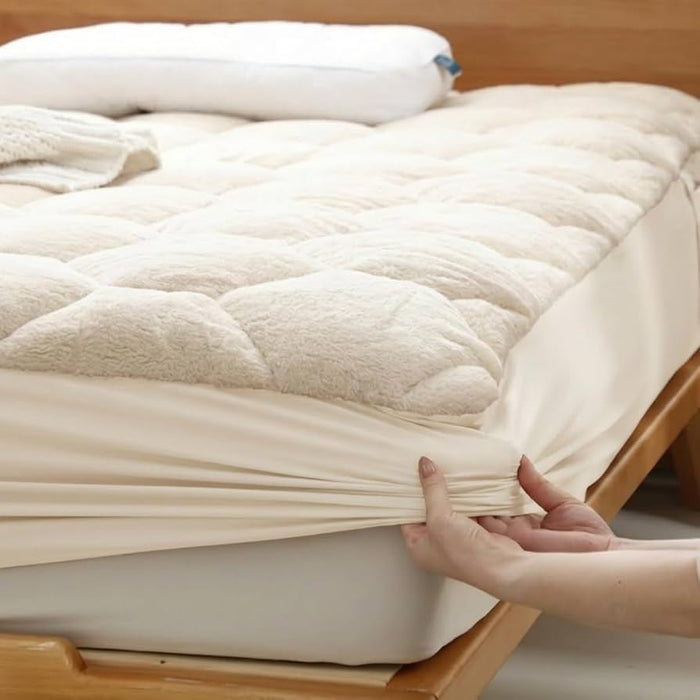
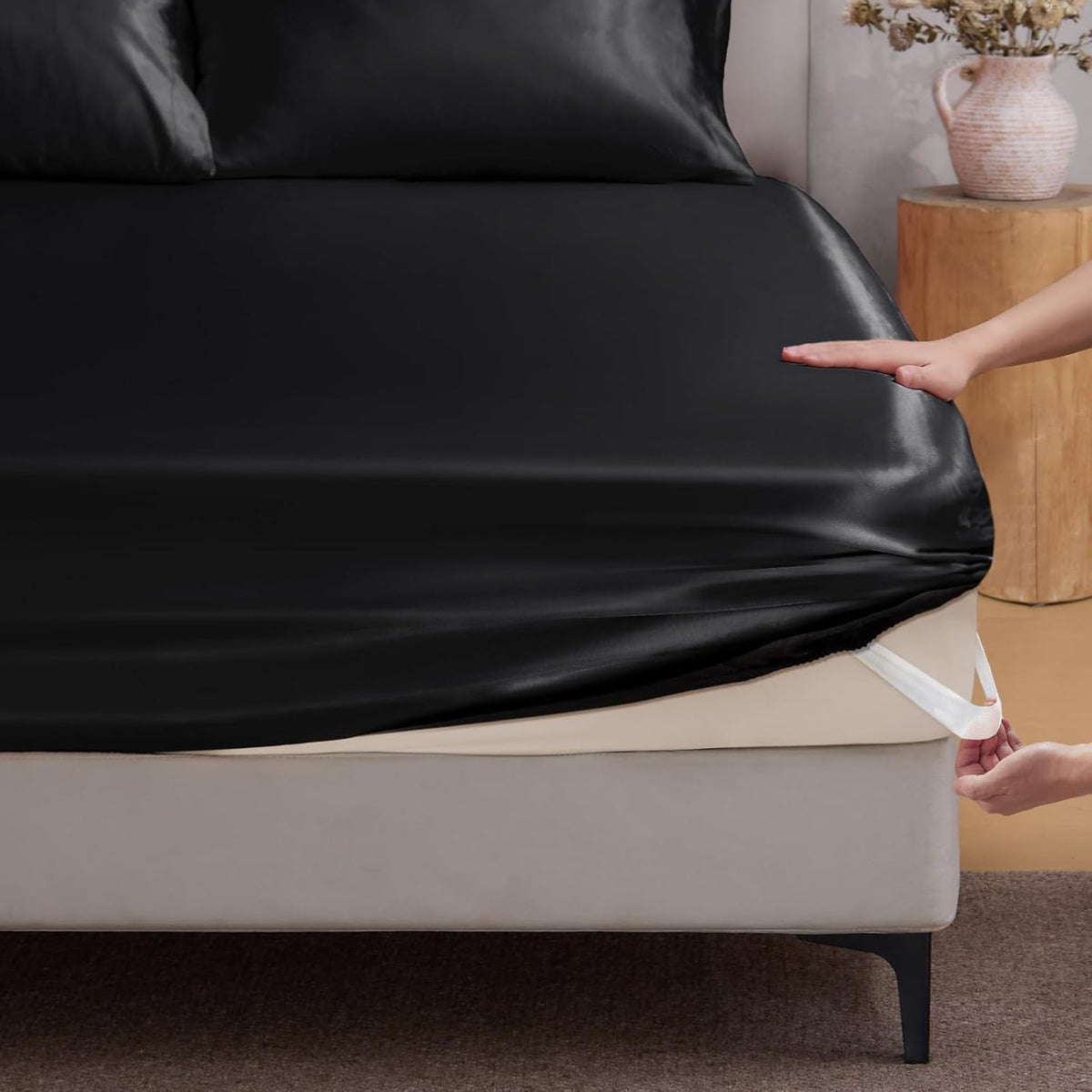
If your fitted sheet keeps coming off, the usual cause is insufficient pocket depth, uneven installation, weakened elastic, or an added bedding layer that changes the mattress profile. Observe where the sheet releases, measure the complete mattress setup, and check the elastic before buying accessories. Matching the fix to the cause will produce a more secure result than repeatedly pulling the loose corner back into place.
Key Takeaways
- A corner that releases immediately often points to insufficient pocket depth or uneven installation.
- Wrinkles and loose fabric usually indicate an oversized pocket, stretched elastic, or an unstable mattress protector.
- Measure the mattress with every topper, pad, and protector in place.
- Install opposite corners first and pull the entire elastic edge beneath the mattress.
- Fitted sheet holders work best when the sheet already fits reasonably well.
- Replace the sheet when its dimensions are wrong, or the elastic no longer recovers.
Why Your Bed Sheets Slip Off the Mattress
The size printed on the package only identifies the general mattress category. A Queen fitted sheet may match the mattress width and length but still slip because its pocket is too shallow, too deep, or unable to maintain enough tension around the lower edge.
The Pocket Is Too Shallow
Pocket depth must accommodate the mattress and every layer above it. A 12-inch mattress can become considerably taller after adding a foam topper, padded protector, or thick mattress pad.
When the pocket is too shallow, the corner seam sits high on the side of the mattress. Turning in bed then pulls the elastic upward until one corner releases.
The Sheet Is Too Loose
A deep-pocket sheet is not automatically a better fit. If the mattress is relatively slim, excess fabric can gather across the surface while the elastic hangs loosely beneath the edge. The first signs are usually wrinkles or bunching before anyone gets into bed. Nighttime movement then shifts the loose fabric toward one side and lifts a corner.
The Elastic Has Lost Tension
Elastic gradually becomes less responsive after repeated stretching, washing, and drying. It may still wrap around the mattress, but it cannot pull the fabric firmly beneath the edges. Check the entire elastic casing because wear may be uneven. One stretched section can explain why the same corner comes loose every night.
Another Bedding Layer Is Moving
A mattress protector or topper can shift independently beneath the fitted sheet. The sheet may be the correct size, yet the moving layer carries it toward one side of the bed.
Smooth protector surfaces, poorly anchored toppers, adjustable bed movement, and active sleeping can add to the problem. These factors usually expose an existing fit weakness instead of causing every slipping problem on their own.
A Three-Minute Check to Find the Real Cause
Start with the bed fully assembled, including the topper, mattress pad, and protector. The Better Sleep Council’s mattress size chart helps confirm the nominal width and length, but you also need the total depth of your own setup.
Use the symptoms below to narrow down the cause before choosing a solution.
| What You Notice | Likely Cause | First Check |
|---|---|---|
| A corner will not reach beneath the mattress | Pocket is too shallow or the sheet is the wrong size | Measure width, length, and total depth |
| The surface is loose before you sleep | Pocket is too deep or the sheet is oversized | Smooth the sheet and check how much fabric remains |
| The same corner releases every night | Uneven installation, localized elastic wear, or a shifting protector | Inspect that corner and the layer beneath it |
| Several corners have started slipping over time | Elastic has lost tension | Stretch a section gently and see whether it recovers |
| The sheet slips when the adjustable base moves | The fit lacks enough wraparound grip | Test the sheet after raising and lowering the base |
Measure from the bottom of the mattress to the highest point of the top layer without pressing it down. Compare that number with the pocket range stated on the specific product page, since pocket labeling and supported mattress depths can vary between sheet collections.

Install the Fitted Sheet Correctly to Prevent Slipping
Remove the pillows and upper bedding so you can reach every side of the mattress. Flatten the protector and topper first, paying particular attention to the corner that usually slips.
Fit the hardest-to-reach corner at the head of the bed, then secure the diagonally opposite foot corner. Attach the remaining two corners and align each corner seam with the corresponding mattress corner.
Pull the pocket fabric down evenly instead of stretching one corner as far as possible. The elastic edge should sit beneath the mattress around the full perimeter, not along the middle of its side.
Once all four corners are in place, smooth the fabric from the center toward the edges. If the surface remains wrinkled or one seam rides higher than the others, reset the sheet before adding the rest of the bedding.
Choose the Right Fix for the Slipping Problem
Different causes require different levels of effort and expense. Begin with the simplest correction that addresses the symptom you found during the fit check.
If the Installation Is Uneven
Remove the sheet and install it again using opposite corners. Confirm that the pocket seam reaches a similar position on all four sides and that no section of elastic is trapped against the side of the mattress. This fix costs nothing and should be tried before adding holders. If the sheet remains secure after being reinstalled, the original problem was positioning rather than construction.
If the Mattress Protector or Topper Moves
Refit each layer separately and smooth it before adding the next one. Check that the protector has the correct size and depth for the assembled mattress. A loose protector can continue moving even when the fitted sheet is tight. Correct that lower layer first so the sheet does not have to hold the entire setup in position.

If the Sheet Is Slightly Loose
Fitted sheet holders can add tension when the sheet is only a little too loose and its elastic remains functional. Corner straps attach beneath individual corners, while crisscross or perimeter systems distribute tension across a larger area. Attach clips to a sturdy hem according to the holder manufacturer’s instructions. Adjust every section gradually because overtightening can strain the sheet, elastic casing, or corner seams.
If the Elastic Needs Better Care
Follow the product’s care label and use low dryer heat when permitted. Remove the sheet promptly instead of leaving it in an extended heated cycle. Wash sheets separately from towels, jeans, and other heavy items that can twist around them. The University of Kentucky Cooperative Extension also recommends separating sheets from items with different fabric weights.
If the Pocket Is Too Shallow
Accessories cannot create the missing fabric needed to wrap a tall mattress correctly. A holder may pull the sheet farther under one corner, but the added tension can transfer stress to the seams or cause another corner to release. Choose a fitted sheet whose stated pocket range accommodates the complete mattress setup. Measure again whenever you add or remove a topper because that change can affect the required depth.

When a Better-Fitting Sheet Is the Long-Term Fix
Continued adjustment is unlikely to help when the corner seams cannot reach the lower mattress edge, the elastic stays stretched after removal, or extreme holder tension is required. Tears near the corners and fabric that pulls diagonally across the bed also indicate that the current fit is unsustainable. For a replacement, prioritize four details:
- The correct mattress width and length
- A pocket depth suited to the assembled mattress
- Elastic around the full fitted-sheet perimeter
- Added corner support when the mattress is tall or movement is frequent
For mattresses up to 18 inches thick, the bamboo viscose sheet set combines an 18-inch pocket with 360° all-round elastic and reinforced corner straps. The continuous elastic distributes grip around the mattress, while the straps provide additional support at the four places most likely to lift.
A deep-pocket design should still match your mattress profile. Check the measurements of the selected sheet set because an excessively deep pocket can leave unnecessary slack on a low-profile mattress.
Keep Every Corner Secure Night After Night
A secure fitted sheet begins with the right dimensions, even tension, and properly aligned corners. Measure the entire mattress setup, correct any moving lower layers, and use holders only when the existing fit is close enough to support them. If the pocket or elastic can no longer provide reliable coverage, explore sheet set collection for designs that better match your mattress and sleeping routine.
FAQs about Fitted Sheet
Q1. Why Does My Fitted Sheet Keep Coming Off One Corner?
One loose corner usually points to uneven installation, localized elastic wear, or a protector that shifts in the same direction each night. Reinstall the sheet from opposite corners and inspect the elastic and bedding layers around the problem area.
Q2. Can a Fitted Sheet Be Too Deep?
Yes. A pocket that is much deeper than the mattress may leave excess fabric and insufficient tension beneath the edges. The sheet can then wrinkle, move across the surface, and work its way off a corner.
Q3. Do Fitted Sheet Holders Work?
Fitted sheet holders can help when the dimensions are close and the sheet needs additional tension. They are less effective when the pocket is too shallow, the sheet is the wrong size, or the elastic is severely worn.
Q4. How Tight Should a Fitted Sheet Be?
The surface should feel smooth and remain in place when you move, but the fabric should not pull the mattress edges upward or strain the seams. Each pocket should extend beneath the mattress without requiring excessive force.
Q5. Can a Mattress Protector Make a Fitted Sheet Slip?
Yes. A loose, thick, or smooth protector can change the mattress depth and move beneath the sheet. Fit the protector securely first, then measure the full setup and select a fitted sheet that accommodates the added layer.