Quick Takeaways
| What to Check | What It Means for Sheet Fit |
|---|---|
| Mattress length | Most Twin XL mattresses are about 80 inches long, so the fitted sheet should also be Twin XL |
| Mattress width | A typical Twin XL mattress is about 38 inches wide, although campus beds may vary slightly |
| Total bed depth | Measure the mattress, topper, and protector as one stack |
| Pocket depth | The fitted sheet should reach beneath the mattress without pulling tightly |
| Full fitted sheets | They add width while losing the extra length needed for a Twin XL bed |
| Queen fitted sheets | They have a similar length but leave too much loose fabric across the width |
A deep-pocket Twin XL fitted sheet is usually the most reliable option for a dorm mattress with a topper. Full and Queen fitted sheets create new fit problems because their corner seams do not line up with a Twin XL mattress.
What Makes a Dorm Mattress Different From a Standard Twin Bed
A standard Twin mattress measures about 38 by 75 inches, while a Twin XL is approximately 38 by 80 inches. The Better Sleep Council explains this five-inch length difference in its mattress size comparison and notes that Twin XL beds are common in college dormitories.
Campus mattresses do not always follow one exact measurement. Their width and thickness can vary by school, residence hall, manufacturer, and bed-frame design. Adams State University, for example, lists 38-by-80-inch Twin XL mattresses in its residence hall packing list and advises students to bring matching Twin XL sheets.

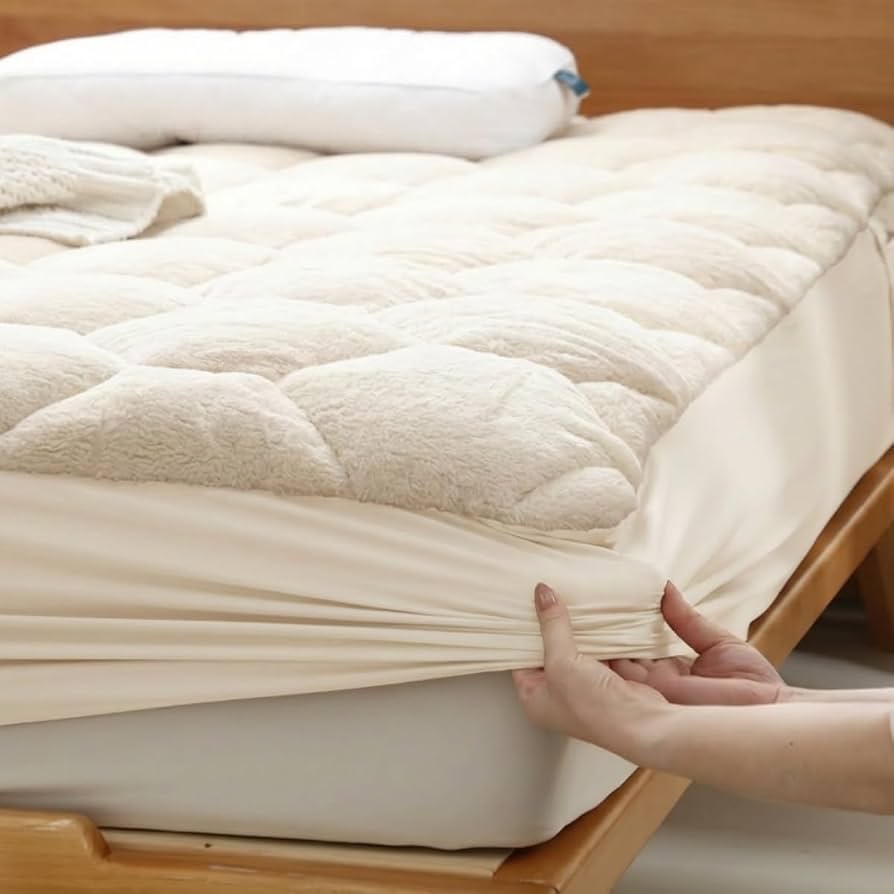
A topper adds height to the bed. A correctly sized Twin XL topper usually keeps the same general width and length, but a two- or three-inch topper increases the distance the fitted sheet must cover. A mattress protector or padded cover can add more depth.
This explains why a fitted sheet may fit the original dorm mattress and become too tight after a topper is added. The sheet still has the correct length, while its pockets may be too shallow for the taller bed.
How to Measure a Twin XL Mattress With a Topper
Measure the bed after installing every layer that will remain beneath the fitted sheet. Package dimensions provide a starting point, although soft toppers can expand or compress after opening.
Measure the Length and Width
Remove the fitted sheet and measure straight across the mattress from side to side. Then measure from the head to the foot without following the rounded edge.
A result close to 38 by 80 inches indicates a typical Twin XL bed. Check the school’s housing information when the mattress cannot be measured before move-in.
Measure the Full Mattress Stack
Place the topper and mattress protector on the bed. Measure from the bottom edge of the mattress to the highest point of the sleeping surface without pressing down.
This measurement gives you the total depth that the fitted sheet must cover. For example, a seven-inch dorm mattress with a three-inch topper and a padded protector may create a stack close to ten or eleven inches deep.
Use the assembled bed for this measurement instead of simply adding the numbers printed on each package. Foam and quilted layers can compress or sit unevenly around the mattress edges.
Check the Space Beneath the Mattress
A fitted sheet should cover the full side of the bed and wrap beneath the bottom edge. This position allows the elastic to grip the mattress securely.
Some dorm mattresses sit inside raised metal frames that make the underside difficult to reach. Lifting one corner at a time can make the fitted sheet easier to install.
Why Sizing Up to Full or Queen Sheets Creates New Fit Problems
A larger bed-size label does not guarantee deeper pockets. Bed sizes describe the surface dimensions of the mattress, while pocket depth describes how far the fitted sheet extends down the sides.
A Full mattress measures about 53 by 75 inches. A Full fitted sheet has much more width than a Twin XL sheet and about five inches less length. The corner seams cannot align with all four mattress corners, which can create loose fabric along the sides and excessive pulling at the foot.
A Queen mattress measures approximately 60 by 80 inches. Its length is similar to a Twin XL, but its width is considerably greater. A Queen fitted sheet can bunch across the sleeping surface and may lack enough elastic tension to remain beneath a narrow dorm mattress.
Flat sheets allow more flexibility because they have no shaped corners. A larger flat sheet may provide extra fabric for tucking, while a fitted sheet depends on accurate corner placement. When a topper increases the bed’s height, select a deeper pocket within the Twin XL size.
How to Choose the Right Pocket Depth for a Dorm Bed
Begin with the total depth you measured after adding the topper and protector. Compare that number with the supported mattress-depth range in the sheet description.
Deep-pocket measurements can vary among sheet collections. Some products list the physical pocket depth, while others state the mattress-depth range they are designed to fit. Review both details when they are available.
The fitted sheet should reach beneath the mattress without placing heavy strain on the seams. Shallow pockets tend to move upward, while excessively deep pockets can leave loose fabric when the elastic cannot draw them in securely.
Elastic construction also affects stability. Elastic around the entire fitted-sheet edge can distribute tension more evenly, while reinforced corner straps can provide additional support. These features work best after the width, length, and pocket depth already match the bed.
Our bedding size guide provides general Twin XL sheet dimensions and supported mattress ranges to help you compare sizes. Check the selected product’s measurements as well because fit details can vary between collections.
When comparing Twin XL bed sheet sets, look at the fitted-sheet dimensions before focusing on color or fabric. After confirming the size and depth, browse our sheet set collection for options that match your dorm setup and care preferences.

A Practical Dorm Sheet and Laundry Checklist
A short preparation routine can prevent fit problems and make laundry easier throughout the semester. Complete the size checks before opening or washing every new sheet set.
Before Buying Sheets
- Check the housing department’s website for the assigned mattress size.
- Confirm whether the bed is Twin or Twin XL.
- Look for the mattress thickness when the school provides it.
- Include the planned topper and protector in the depth calculation.
- Compare the total depth with the sheet’s supported fit range.
- Check the return policy in case the campus mattress differs from the posted size.
If the housing page lists only Twin XL, contact the residence hall for the mattress depth or measure the bed after arrival. Keeping one set unopened until the measurements are confirmed can make an exchange easier.
Before Move-In Day
- Allow a foam topper to expand according to its instructions.
- Place the topper and protector on the mattress before installing the sheet.
- Put the hardest-to-reach fitted-sheet corners on first.
- Align each corner seam with the matching mattress corner.
- Pull the elastic beneath the bottom edge.
- Smooth loose fabric toward the sides without overstretching one corner.
- Pack a second sheet set so the bed remains covered on laundry day.
Two sets of bed sheets for dorm rooms are practical for many students. One set can stay on the bed while the other is being washed, drying, or waiting to return from a shared laundry room.
Follow the care label and leave enough room for the sheets to move inside the washer. Washing towels separately can also reduce lint and friction against smoother bedding.
Measure the Full Mattress Stack Before Move-In Day
Twin XL sheets can cover a dorm mattress topper when the fitted sheet matches the bed’s length and has enough pocket depth for every layer. Measure the complete stack, stay with the Twin XL size, and confirm the supported depth before ordering. The right measurements will help the sheet remain smooth, secure, and easier to install throughout the semester.
Frequently Asked Questions About Will Twin XL Sheets Fit Over
Q1. What Size Sheets Fit a College Dorm Bed?
Many college dorms use Twin XL mattresses measuring approximately 38 by 80 inches. Check the school’s housing information because some residence halls use different widths, depths, or bed sizes.
Q2. Will Deep-Pocket Twin XL Sheets Fit Over a Mattress Topper?
Deep-pocket Twin XL sheets can fit when their supported depth covers the mattress, topper, and protector together. Measure the assembled bed and compare that number with the product’s stated fit range.
Q3. Can Regular Twin Sheets Fit a Twin XL Dorm Mattress?
A regular Twin fitted sheet is generally five inches shorter than a Twin XL fitted sheet. Stretching it over an 80-inch mattress can strain the seams, pull the pockets upward, and cause the sheet to come loose.
Q4. Will Full Sheets Fit a Twin XL Bed?
A Full fitted sheet has extra width and less length than a Twin XL fitted sheet. Its corners will not align correctly, so the fabric may feel loose along the sides and tight from head to foot.
Q5. Can Queen Sheets Fit a Twin XL Mattress?
A Queen fitted sheet has a similar length but considerably more width. The extra fabric can wrinkle or bunch, and the elastic may have too little tension to grip the narrow mattress securely.
Q6. How Do You Measure a Mattress for Fitted Sheets?
Measure the width, length, and total depth with the topper and protector installed. For depth, measure from the bottom edge of the mattress to the highest point of the top layer without pressing down.